
BioHAVEN

Boosting hydrogen production from high-water-content biowaste with negative carbon emissions

BioHAVEN

The BioHAVEN project, funded by the Horizon Europe programme, aims to boost hydrogen production from biowaste with high water content through an innovative pathway based on hydrothermal gasification, gas separation and methane pyrolysis.

BioHAVEN will investigate new catalytic solutions and optimise system integration to improve energy efficiency and reduce the cost of hydrogen production. The project will focus on biowaste that is difficult to manage and recycle, such as sewage sludge, digestates, manure, compost and agro-industrial waste.

In addition, tools will be developed for feedstock selection and waste preparation, together with a decision-support system to facilitate the techno-economic, environmental and social assessment of the proposed solutions. In this way, the project will contribute to advancing renewable hydrogen technologies, improving biowaste management and strengthening international cooperation in the circular economy and energy transition.

Duration: June 2026 - May 2030
Coordinator: Mälardalen University (MDU)
Cetaqua, Università degli Studi di Firenze (UniFi), Universitetet i Stavanger (UiS), European University Cyprus (EUC), Ethnicon Metsovion Polytechnion - National Technical University of Athens (NTUA), Consorzio per la Ricerca e la Dimostrazione sulle Energie Rinnovabili (RE-CORD), Commissariat à l'énergie atomique et aux énergies alternatives (CEA), European Researches Projects for Innovation (EUAbout).
Funded by the EU

Related news

Here you will find the latest news related to this project

View all news
  • A pioneering technology boosts energy self-sufficiency in wastewater treatment plants in Alicante and Murcia

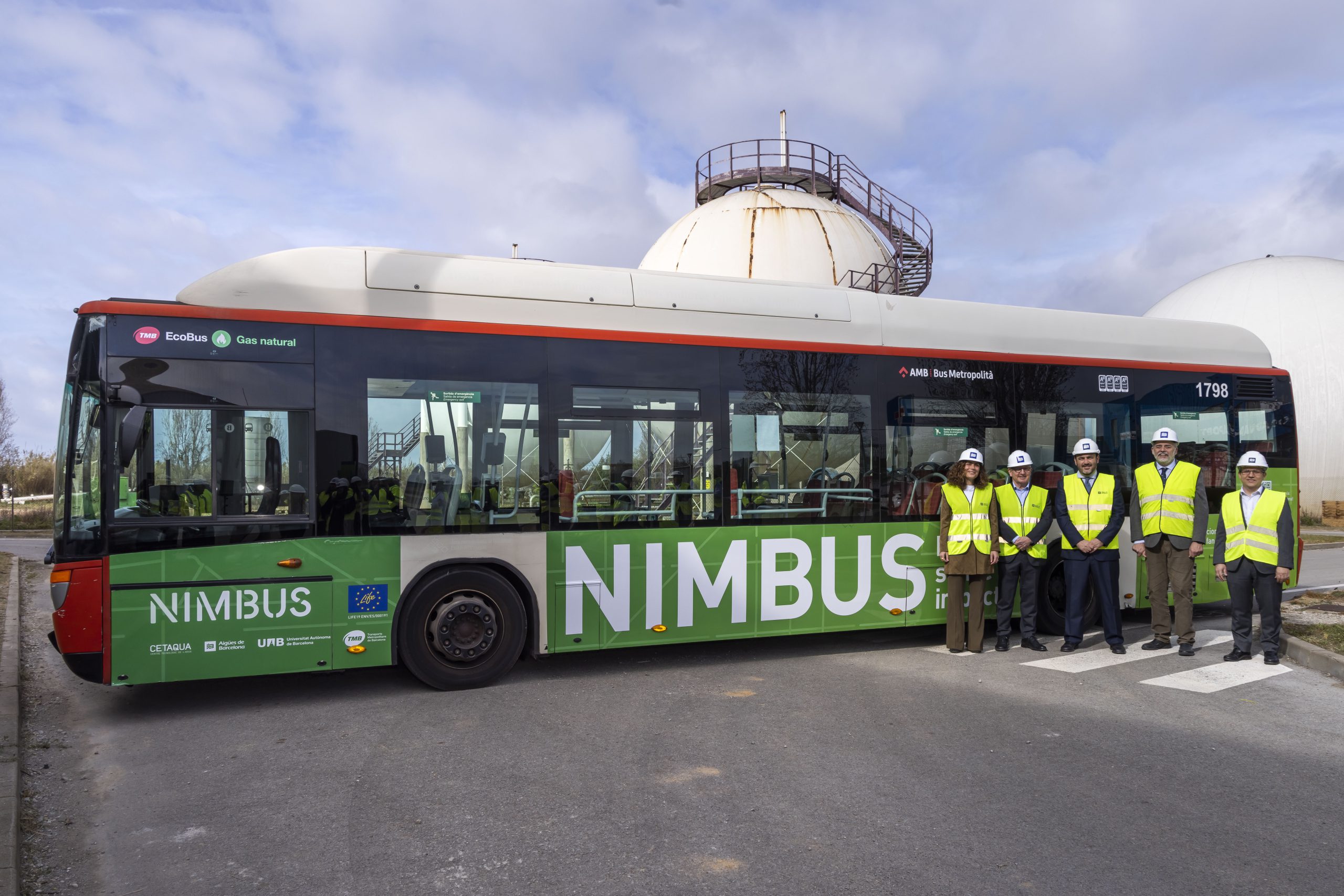
  • Barcelona adopts biomethane as bus fuel thanks to the LIFE NIMBUS project

  • BIOCENPLAS, a sustainable model in the fishing processing industry

  • BIOCENPLAS, a sustainable model in the fishing processing industry.

  • Biomethane, one of the keys to a sustainable energy future

  • CIGAT Circular, the commitment by the Xunta de Galicia, Viaqua and Cetaqua to decarbonise Galicia by converting waste into resources

  • Closer to a circular canning industry thanks to Conserval Poctep

  • EDAR 360, Galician technology and talent for the digitalization of the water sector

  • ENDORSE kicks off, the project that will recover phosphorus from wastewater for use as a biofertiliser

  • HYIELD project to build Europe’s first industrial-scale waste-to-hydrogen plant

  • LIFE ENRICH promotes circular economy in the water and agriculture sectors

  • P2Green, the European project that aims to validate the potential use of reclaimed water as a biofertilizer for irrigation in La Axarquía (Málaga)

  • Palencia WWTP, the first in Europe to become a biofactory to promote zero waste

  • Reusing waste from the oil industry will be possible thanks to the European project LIFE CYCLOPS 

  • The BioPhoto project concludes after producing sustainable hydrogen from organic waste

  • The BioPhoto project will develop a technology for the production of green hydrogen from organic waste

  • The CAPTURE project will drive innovative solutions to reduce marine microplastic pollution in Galicia and Northern Portugal

  • The European LIFE NIMBUS project opens its plant for the production of biomethane from treatment plant sludge

  • The European SEMPRE-BIO project will demonstrate new cost- effective ways to produce biomethane

  • The LIFE MERLIN project kicks off to promote the production of biogas in treatment plants

  • The MULTIPLY project develops ten microalgae-based products for key industrial sectors

  • The NPower project launches two pilot plants in Murcia to recover nitrogen and phosphorus from urban wastewater

  • The WalNUT project concludes after four and a half years transforming wastewater into biofertilisers

  • Viaqua and Cetaqua bet for a carbon-neutral Galicia with the consolidation of the CIGAT CIRCULAR Mixted Research Centre

  • WATERUN project concludes after validating innovative solutions for the sustainable management of urban runoff water