
News
– The facilities, located at the Águilas and Cabezo Beaza wastewater treatment plants, will produce recovered fertilisers from urban wastewater
– With these two pilot plants, the project aims to recover more than 80% of nitrogen and up to 45% of phosphorus present in wastewater
The excess of nitrogen and phosphorus in the environment is currently a major environmental challenge. Their accumulation in water bodies leads to uncontrolled growth of algae and other organisms, depleting dissolved oxygen and damaging aquatic ecosystems, degrading soils and affecting biodiversity. At the same time, these nutrients are essential resources for agriculture that are lost within the water cycle.
To address this issue, Cetaqua – Water Technology Centre has launched two pilot plants at wastewater treatment plants (WWTPs) in the Region of Murcia, within the framework of the European NPower project, with the aim of recovering nitrogen and phosphorus from urban wastewater.
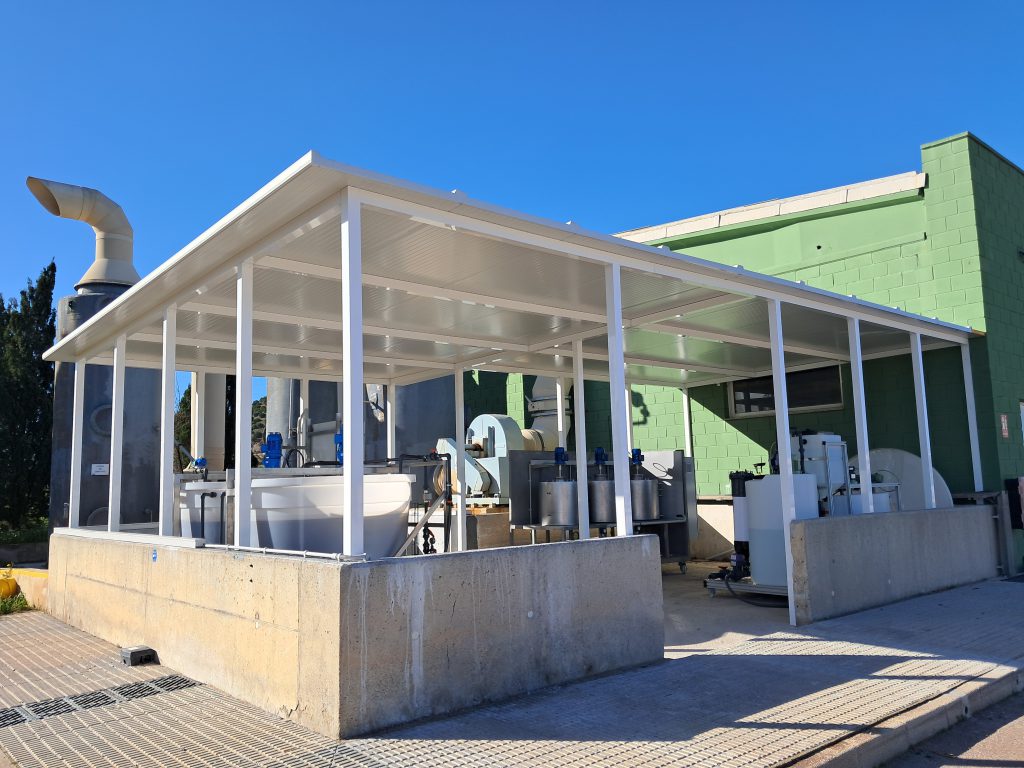
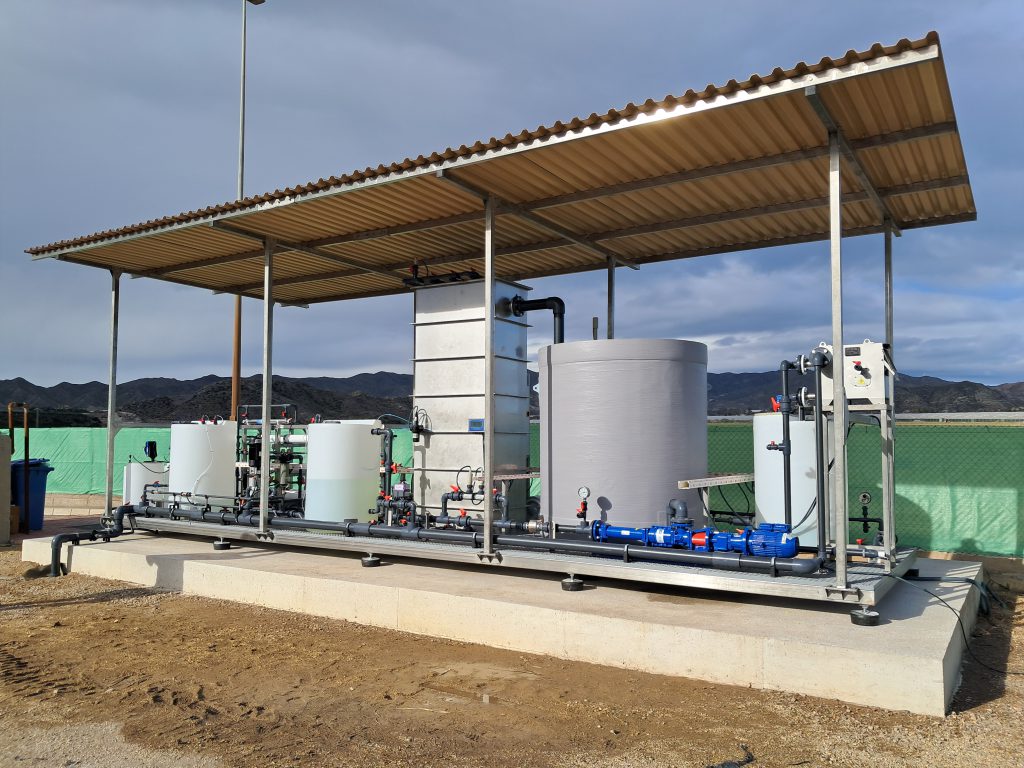
The two facilities, developed in collaboration with Veolia, are located at the Cabezo Beaza and Águilas WWTPs. Their objective is to demonstrate, under real conditions, that it is possible to recover nitrogen and phosphorus from urban wastewater and transform them into high-quality fertilisers suitable for agricultural use, thus contributing to a more efficient and circular use of these nutrients.
Each pilot plant targets the recovery of a different nutrient, using treatment processes specifically designed to maximise efficiency.
At the Águilas WWTP, the pilot focuses on producing reclaimed water with high nitrogen content, optimising technologies already validated in previous projects such as CIGAT Circular. The process treats wastewater through a bioreactor to remove organic matter, followed by ultrafiltration to eliminate suspended solids, nanofiltration to reduce salinity, and finally disinfection using ultraviolet light and oxidising agents. The result is nitrogen-rich reclaimed water suitable for fertigation, a technique that combines irrigation and fertilisation and partially replaces the use of conventional fertilisers. The objective of this pilot is to recover more than 80% of the nitrogen contained in urban wastewater.
At the Cabezo Beaza WWTP, the pilot focuses on recovering phosphorus salts (specifically struvite) from the primary treatment effluent. The process combines a phosphorus removal stage in a biological reactor with an anaerobic elutriation phase—a technology that enables the release and concentration of phosphorus accumulated in the sludge—followed by chemical precipitation to obtain the final product: phosphorus salts directly reusable as fertiliser. The goal is to recover between 30% and 45% of the phosphorus present in the treatment plant.
Lidia Paredes, Project Manager and researcher at Cetaqua, highlights the transformative potential of these facilities: “WWTPs can be much more than treatment facilities: with technologies like those being tested in NPower, they can become true eco-factories, capable of recovering nutrients and transforming them into fertilisers, ensuring their availability at national level and reducing our dependence on imported products.”
Cetaqua’s two pilot plants are part of the regional cluster for Spain and Southern Europe within the NPower project, whose main objective is to provide solutions to the five key sectors responsible for nitrogen and phosphorus emissions (agriculture, other primary sectors, wastewater management, energy and transport, and industry), in order to limit emissions and ensure a sustainable presence of nutrients in the environment.
Over its four-year duration (2025–2028), NPower, funded by the European Union’s Horizon Europe programme, will demonstrate six innovative technological solutions for nutrient recovery and produce eight fertilisers that will be tested in agricultural fields over four cropping cycles. In addition, it will define best management practices across rural, coastal, urban and industrial environments, and develop a governance toolkit to mitigate nutrient emissions to air, water and soil.
The results obtained from the Murcia pilot plants will contribute to demonstrating that nutrient recovery from urban wastewater is a scalable and replicable solution across other European regions, aligned with the European Union’s circular economy and sustainability objectives.
More information about NPower on its website.
The NPower project is driven by a consortium of 25 organisations from 6 European countries: CETENMA (coordinador), Cetaqua, Veolia, Centro de Edafología y Biología Aplicada del Segura (CEBAS – CSIC), Instituto Murciano de Investigación y Desarrollo Agrario y Medioambiental (IMIDA), Natural Resources Institute Finland (LUKE), Universidad Politécnica de Cartagena (UPCT), Ghent University (UGENT), Munster Technological University (MTU), University College Dublin (UCD), Zurich University of Applied Sciences (ZHAW), Lambert Europa (LMB), JISAP, DAB Biotecnología, Probelte Biofertilizantes, Kveloce, Federación de Municipios de la Región de Murcia (FMRM), Federación de Cooperativas Agrarias de Murcia (FECOAM), Boerenbond, Water Europe, Irish Bioeconomy Foundation (IBF), Strane Innovation, Rural Loop, The Central Union of Agricultural Producers and Forest Owners (MTK), Gobierno Regional de Murcia.
The views and documentation provided in this publication are the sole responsibility of the author(s) and do not necessarily reflect the views of the entities funding the project.