
News
– The project will develop pilots at four European sites, including the province of Málaga, to address problems arising from floods, droughts and cyberattacks
– With a budget of 6 million euros, ECHO will coordinate critical infrastructure operators, emergency service providers and local authorities to improve critical infrastructures in urban environments
As urban areas become increasingly digital, interconnected and complex —along with growing threats such as climate change, natural disasters and cyberattacks— an urgent need arises to strengthen the resilience and security of critical infrastructures and thus guarantee the essential services for society. However, the current state of resilience planning and management in Europe faces difficulties due to strategies developed from a distance, which do not take into account specific local or regional needs. These difficulties result in operational inefficiency among key actors and fragmentation of existing resources.
To address these challenges, the ECHO project will create a multi-level Resilience Ecosystem that will bring together critical infrastructure operators, emergency service providers and local/regional authorities. The objective will be to develop innovative tools, services and strategies aimed at improving urban resilience planning and management. This will foster best practices and empower actors of all sizes to strengthen essential services, ultimately improving the safety and well-being of citizens.
An approach of international collaboration and local knowledge
The project has a budget of 6 million euros and is funded by the European Union. Combining the expertise of 26 organisations distributed throughout the EU, the ECHO project will develop a Resilience Strategy, an Information Exchange Protocol and a Knowledge Aggregator, aimed at ensuring the effective use of resources and responses to different types of crises.
The set of solutions will be accessible through a centralised Platform that will include Artificial Intelligence tools to advance threat forecasting, risk assessment, situational awareness, decision-making support and evaluation of resilience plans, as well as scenario-based simulations to address various threats, while ensuring transparency and data security.
These solutions will be tested and validated at four European sites, addressing multiple hazards such as floods, landslides, droughts, earthquakes, wildfires, and cyberattacks, and involving critical infrastructure operators, emergency services and local/regional authorities. In Spain, the province of Málaga has been selected for the demonstrations, with the participation of: Diputación de Málaga, Ayuntamiento de Estepona, Servicio Andaluz de Salud, Cetaqua-Centro Tecnológico del Agua, and Universidad Politécnica de Madrid.
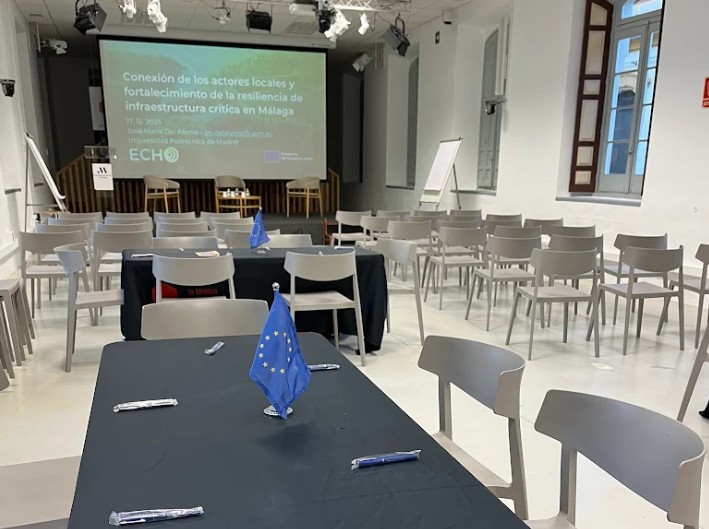
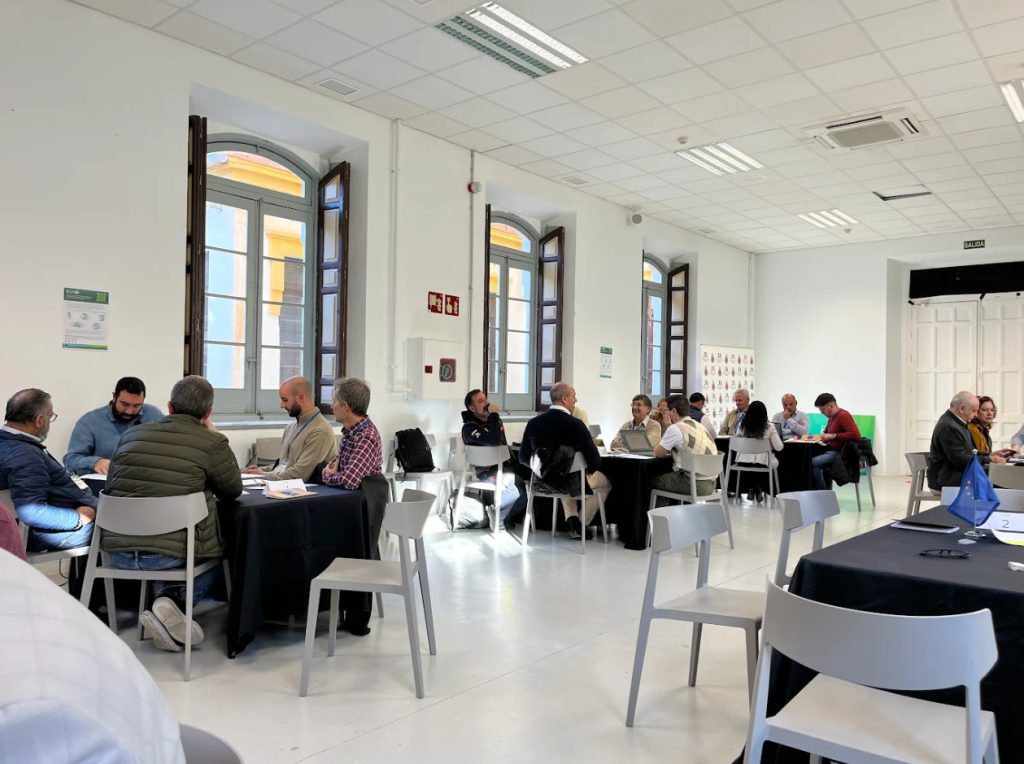
The ECHO project began on October 1, 2025 and will last three years. While it is underway, it will foster collaboration with other relevant actors in critical infrastructure resilience through knowledge exchanges and workshops.