
News
– The project, funded by Horizon Europe, will accelerate the transition towards sustainable, intelligent. and environmentally responsible hydroelectric systems in Spain, Switzerland, Romania. and Madeira (Portugal)
– Two case studies will be established in Granada province to improve the efficiency of hydroelectric plants in contexts of water scarcity and high energy demand through monitoring and the development of digital management tools
Hydroelectric power currently represents Europe’s largest source of renewable electricity and remains essential for achieving the continent’s climate neutrality objectives. However, regions such as Andalusia face various challenges in producing it, including prolonged drought periods exacerbated by climate change, the overexploitation of water resources from aquifers or rivers, and growing energy demand. To address these challenges, HydroPulse has been launched—a new initiative under the Horizon Europe programme that will drive sustainable hydroelectric power generation across various European regions, including Granada.
HydroPulse, which recently commenced in Athens (Greece), will develop and demonstrate pioneering hydroelectric solutions capable of supplying renewable energy whilst safeguarding river ecosystems, strengthening climate resilience and creating long-term value for communities.
The solutions developed will be tested in two case studies in Granada, in addition to three further cases in Switzerland, Romania and Madeira (Portugal), and comprise the creation of a new framework for climate-resilient hydroelectric systems that integrates advanced digital technologies, ecosystem restoration, environmental monitoring and the development of inclusive governance models.
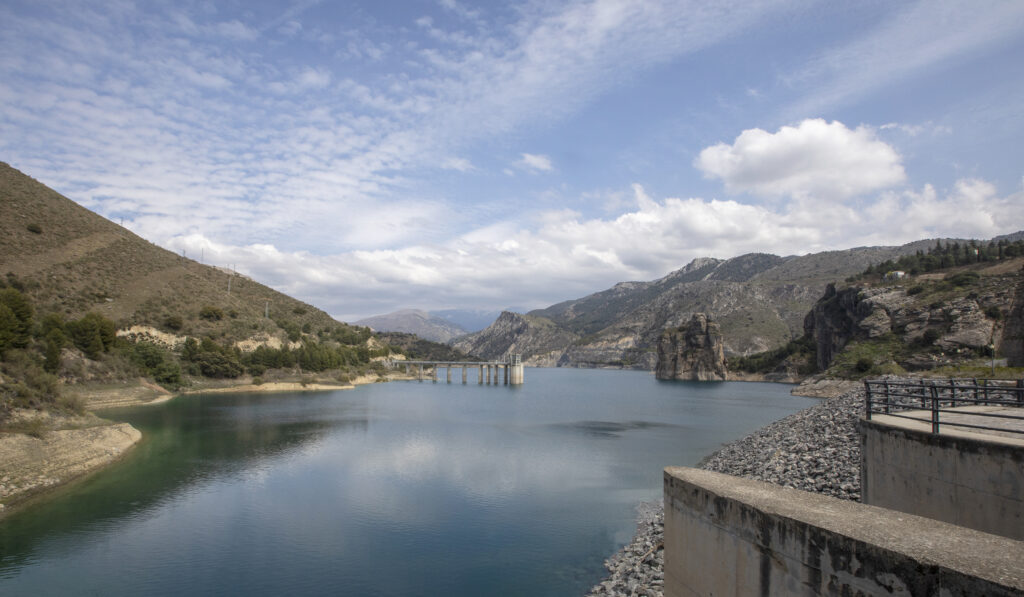
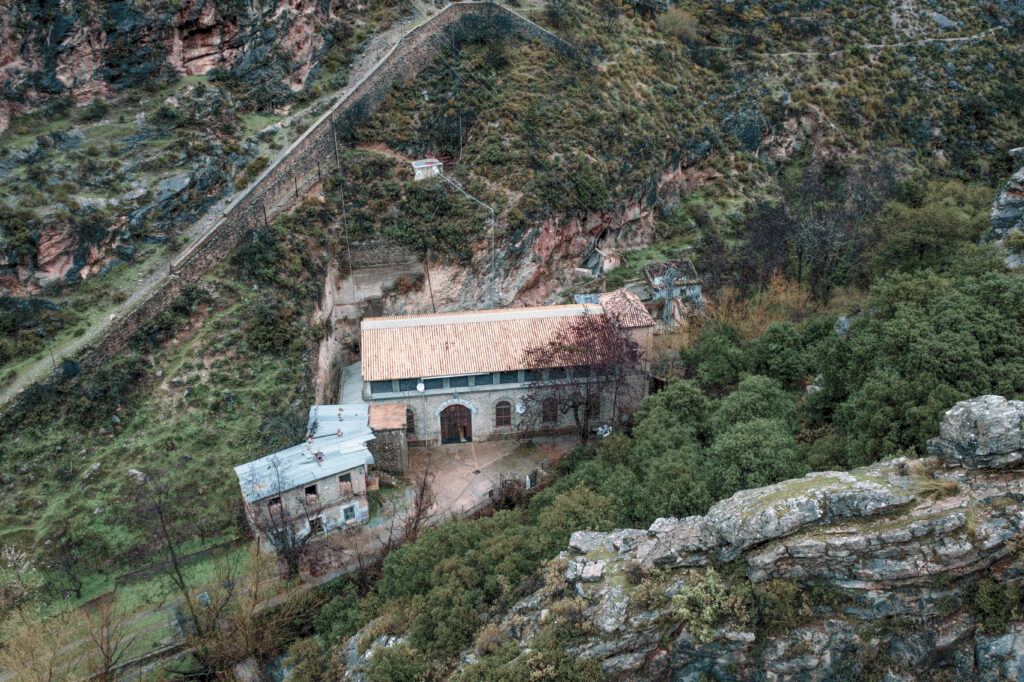
The Granada case studies will be located at the Monachil River hydroelectric plant, La Vega, managed by Cuerva, and at a hydroelectric plant at the Canales reservoir, whose water distribution for supply is managed by EMASAGRA. Both cases will address how to harness hydroelectric resources and explore their impact on decarbonisation strategy, with similar shared challenges: water stress caused by severe droughts, environmental degradation, and high water and energy demand. Nevertheless, they offer complementary characteristics.
José Manuel Nieto, Project Manager and researcher at Cetaqua, a centre involved in both Granada case studies, explains why the HydroPulse project will have a direct impact on the region: “thanks to solutions such as real-time monitoring of ecosystem health and river dynamics, or the use of artificial intelligence and advanced predictive analysis, we will be able to improve the management of water releases for hydroelectric power production. In this way, water can be utilised to maintain ecological flows, whilst simultaneously boosting the territory’s water resilience through managed aquifer recharge activities”.
HydroPulse brings together 16 leading organisations from 9 countries, combining expertise in engineering, hydrology, ecology, artificial intelligence, environmental sciences, digital technologies, policy, and stakeholder engagement.
The project reflects a growing recognition that achieving climate neutrality requires integrated solutions capable of addressing interconnected environmental, economic, and social challenges. Thus, the consortium’s interdisciplinary approach will transform rivers, reservoirs, and hydroelectric assets into living laboratories where innovative solutions can be tested, refined, and scaled for broader European adoption.
HydroPulse (Hydropower for Participatory Upscaling of Local Solutions and Ecosystem-based strategies) is a research and innovation project coordinated by NTUA with the participation of Cetaqua, Emasagra, Cuerva, Aarhus University, University of Applied Sciences and Arts Western Switzerland, CARTIF, IREC, Infersence, Jagiellonian University, HEAS AG, ISOTECH Ltd, Bucharest University, ARDITI, Alpiq, and Brunel University London. It has a planned duration of 42 months and is funded by the Horizon Europe programme from the European Union (Grant Agreement No. 101268715).
Further information about HydroPulse: https://www.hydro-pulse.org/
Funded by the European Union. The opinions and viewpoints expressed are the sole responsibility of their authors and do not necessarily reflect those of the European Union or the funding authority. Neither the European Union nor the funding entity can be held responsible for them.